


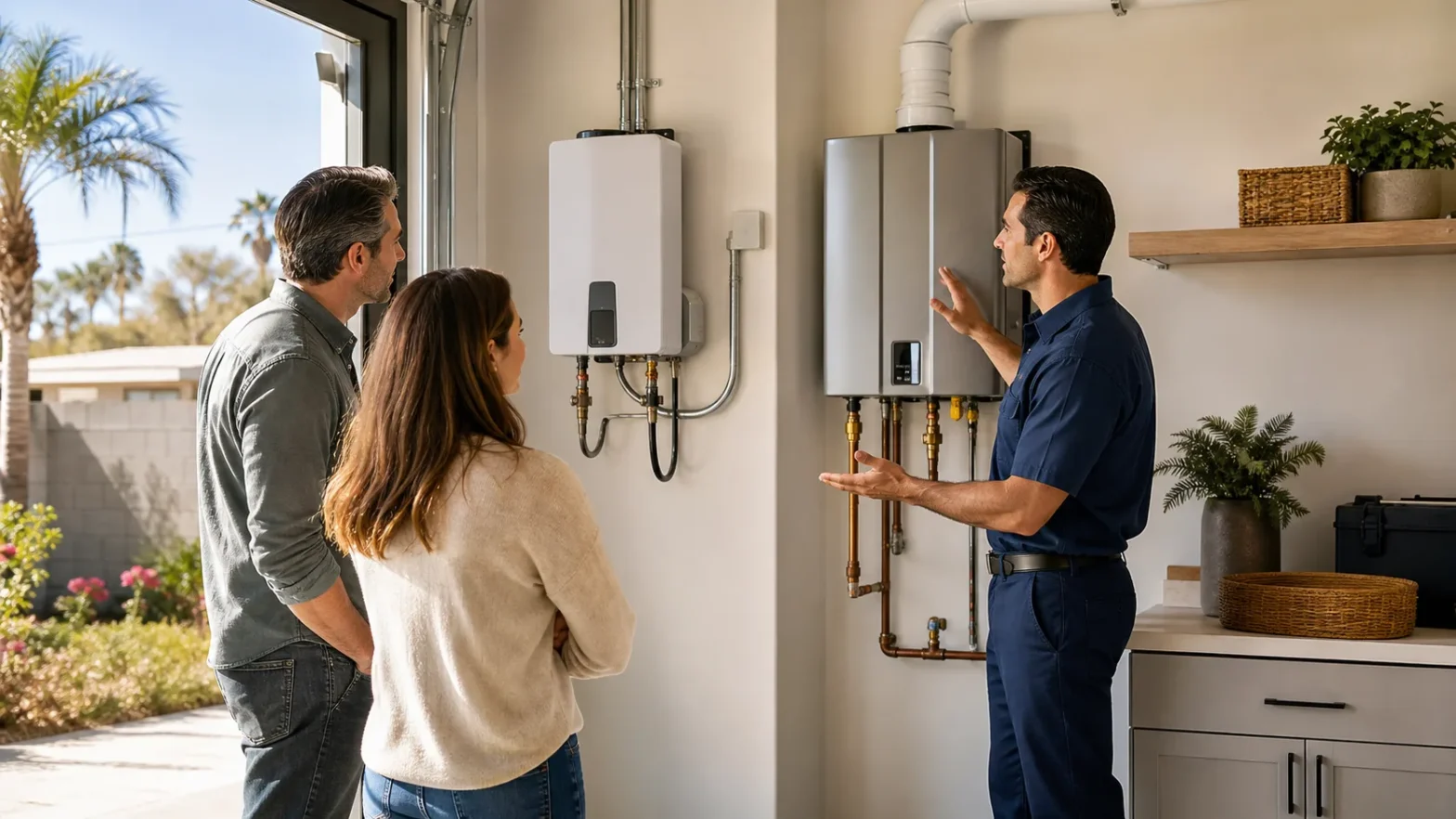
Electric Tankless Water Heaters Vs Gas Options for Monrovia Homes
Choosing between electric and gas tankless water heaters comes down to more than picking a fuel source. Both systems heat water when you need it, rather than keeping a large tank of water heated all day. The right choice depends on your home’s layout, utility connections, and the way your family uses hot water.
As fall brings busier household routines and holiday guests, it is a good time to think about whether your current water heater keeps up. We help Monrovia homeowners compare hot water flow, energy use, installation needs, maintenance, and seasonal water temperature changes before selecting a tankless system. A proper in-home assessment lets us look at your plumbing, gas supply, electrical panel, and daily hot water habits.
Endless Hot Water Starts with Proper Sizing
Tankless water heaters are designed to provide hot water on demand. When you turn on a shower, faucet, dishwasher, or washing machine, the unit heats water as it moves through the system. That means there is no storage tank constantly holding heated water.
Still, “endless” hot water does not mean unlimited hot water at every fixture all at once. Every tankless unit has a flow capacity. If several fixtures need hot water at the same time, the heater must be large enough to support that demand.
For example, we look at whether your household often uses hot water for:
- Multiple showers during the morning rush
- Laundry while someone is bathing
- Dishwashing during meal cleanup
- A large tub that needs a long fill time
A smaller home with staggered water use may have very different needs than a home where several bathrooms are active at once. We do not recommend treating tankless selection as a one-size-fits-all choice. The best unit is the one that matches your real routines, not just the number of people living in the home.
Electric Efficiency and Gas Flow Capacity
An electric tankless water heater in Monrovia can be a strong fit for homes that want an all-electric setup or do not have an accessible gas line. Electric models heat water directly with electrical components, without a pilot light, fuel combustion, or a storage tank. Their compact size can also make them appealing when space is limited.
Gas tankless water heaters often provide higher whole-home flow capacity. For a larger household, that added output can make a difference when showers, appliances, and faucets are running near the same time. Of course, the available gas supply and the selected unit both matter. A gas system cannot perform as intended if the line serving it is too small for the demand.
Energy use should be part of the conversation, but it should not be the only deciding factor. Utility rates, water habits, unit size, and system maintenance can all affect what makes sense over time. During an evaluation, we can calculate the expected hot water demand in gallons per minute and explain which type of system fits that demand.
Installation Requirements Matter
Electric tankless units may look simple because they are compact, but whole-home models can require substantial electrical capacity. Many need dedicated circuits, proper wiring, and enough available amperage at the electrical panel. Older homes may require panel work or electrical upgrades before an electric unit can be installed safely.
Gas systems have a different set of requirements. Correct gas line sizing, safe venting, combustion air, water connections, and possible condensate drainage all need professional attention. In some homes, the existing gas line was designed for other appliances and may not supply enough fuel for a high-demand tankless water heater.
Both types share a valuable space-saving benefit: they mount on a wall and can free up the area once used by a bulky storage tank. Placement still matters, though. We inspect each possible location for access, clearance, service needs, plumbing connections, and code-compliant installation.
Before choosing a model, we recommend reviewing:
- Available electrical panel capacity
- Existing gas line size and location
- Venting needs for gas equipment
- Water line connections and installation space
- Access for future service and maintenance
Plan Around Household Demand and Seasonal Changes
Monrovia’s mild climate does not remove the need for careful tankless sizing. Water entering the home can change temperature as the seasons shift. A tankless unit must raise that incoming water to the temperature you choose at the shower or faucet, and that affects how much hot water it can provide at one time.
Household demand often matters more than household size alone. Two people who shower at separate times may need less capacity than two people who regularly run a shower, laundry cycle, and dishwasher together. A home with a frequently used soaking tub or several active bathrooms may also need a higher-output solution.
Electric systems can work well for point-of-use needs, smaller homes, or homes with modest simultaneous demand, provided the electrical system can support them. Gas units may be a better fit where higher whole-home flow is needed. Before we visit, it helps to make a simple list of your busiest hot water moments. That gives us a clearer picture of what your household needs on a typical day.
Keep Your Tankless System Performing Well
Both electric and gas tankless water heaters need regular professional maintenance. Mineral buildup can affect heat transfer and internal components, especially where water contains minerals. Flushing, filter checks, and inspections can help protect dependable hot water performance and support the manufacturer’s service recommendations.
Gas units also need professional checks of the venting, gas connections, burners, ignition parts, and condensate system when applicable. For electric equipment, we inspect heating elements, wiring, breakers, and water connections. High-voltage parts and plumbing connections are not a good place for guesswork.
The fuel choice is only one part of a successful tankless upgrade. A system that is properly sized, safely installed, and maintained for your household’s actual routines is far more likely to provide steady hot water when you need it.
Get Hot Water That Fits Your Home
Magic Rooter & Plumbing can help you compare your options and plan an electric tankless water heater in Monrovia that aligns with your household’s needs. Our team can answer questions about performance, operating considerations, and installation requirements. Contact us to discuss your next steps with a residential plumbing professional.